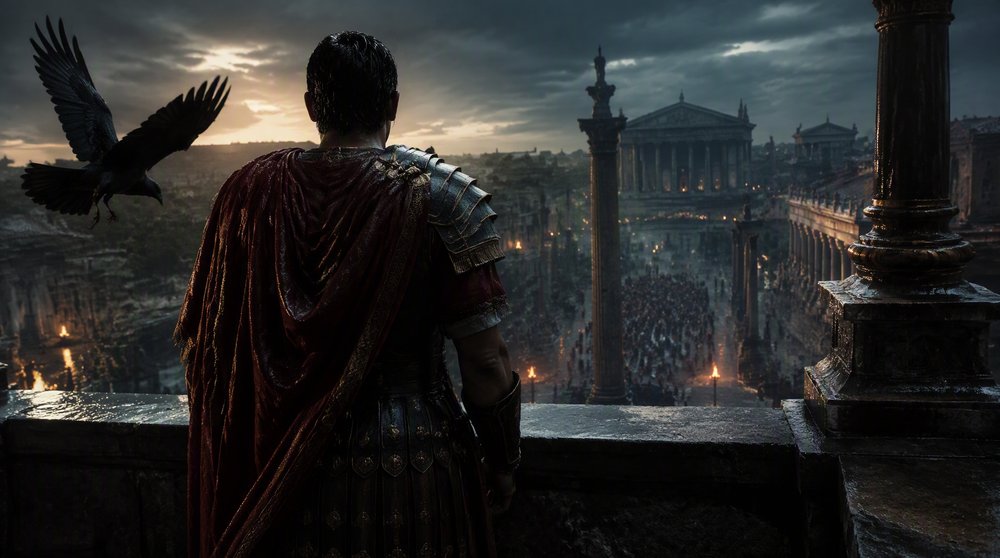
Rome, 69 AD. In the span of twelve months the empire will burn through four emperors — Galba, Otho, Vitellius, and finally Vespasian — and Lucius Valerius Corvus, a Praetorian centurion with a raven tattoo on his forearm and a scar from temple to jaw, is the man each regime hands its dirty work to. He is good at his job. He has to be: hidden across the city is Flavia, the daughter he cannot afford to let any government notice.
Corvus survives Galba's murder in the first days of January, Otho's brief and desperate reign, and Vitellius's occupation of a city he no longer recognizes, kept alive as much by the people around him as by his own discipline — Sabina, a tavern keeper whose network of cooks, porters, and widows knows more than the Senate does; Decimus, the oath-brother who dies protecting him; and Livia, a widow who has learned that grief, worn correctly, opens doors soldiers can't kick down. Each regime asks him to prove his loyalty in blood, and each time he pays it, a little more of what he actually believes in goes missing.
By the time Rome itself is burning and a new order is arriving through sealed letters and banners rather than armies, Corvus has run out of regimes willing to tell him what obedience is for. What he chooses instead — for Flavia, for Sabina, for the year that cost him everything he used to call honor — is the one refusal the empire never accounted for.